

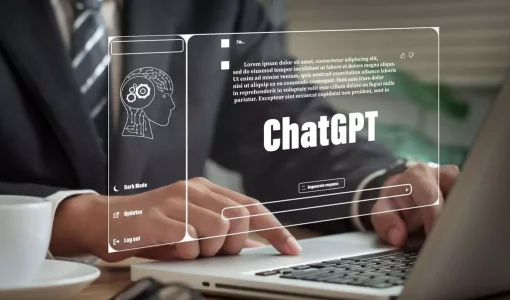
Internally, it can help to streamline communication and increase productivity, while externally, it can enhance customer service, boost engagement, and drive sales. The potential applications of conversational AI are endless, and its impact on how we interact with technology is only beginning to be felt. One of the biggest challenges for conversational AI are customer expectations. On the one hand, some consumers have very low expectations about chatbots because they’ve only had bad experiences with very basic bots. On the other hand, others imagine a chatbot to be a highly advanced form of self-learning artificial intelligence and are disappointed when their expectations aren’t met.

Institutes no longer have to constantly summon students for their details every single time something needs to be updated. Edtech bots can help students with their enrolment processes and further provide them with all the necessary information about their courses, modules, and faculties. These tutoring systems can also cater to the needs of neurodivergent students who may have learning disabilities and help all students understand difficult topics and subjects by customising their learning plans. This is because chatbots not only ease the education processes but also ensure qualitative learning.
Evolve the educational experience with Automated Conversational Journeys
They wanted to shorten their sales cycle, handle the constant influx of queries, and integrate their engagement system with their existing marketing software to store leads. We must keep walking, to ensure that AI contributes to creating a world where knowledge is democratised and used for the common good. Therefore, we can adapt our curricula and instructional techniques to match a world where machines think. Conversational AI could be a solution to many business challenges or a unique feature of a product looking to push boundaries. No matter how you wish to explore the technology, Quantilus can help you navigate the possibilities. NLP is one of the most promising disciplines of AI, which employs data science to make human-computer interaction easier.
How is AI making an impact in the field of education?
Post-teaching feedback: Demszky added that AI can produce post-lesson reports that summarize the classroom dynamics. Potential metrics include student speaking time or identification of the questions that triggered the most engagement. Research finds that when students talk more, learning is improved.
For instance, this study mainly focused on early adopters of ChatGPT in education. It also relied on qualitative analysis without the use of quantitative analysis. Particularly, SNA provides a cross-sectional perspective and the tweets are limited to a specific time period including Tweets in English.
Battling ChatGPT:
Our customer service solutions powered by conversational AI can help you deliver an efficient, 24/7 experience to your customers. Get in touch with one of our specialists to further discuss how they can help your business. AI algorithms can be used to assess students’ understanding of the subject material. It analyzes their responses to questions or activities presented to them. It enables us to interact with our educational material in a more natural, engaging, and efficient way. Conversational AI is transforming education for students and instructors alike.
Binghamton University and six HBCUs forge new alliance … – binghamton.edu
Binghamton University and six HBCUs forge new alliance ….
Posted: Mon, 12 Jun 2023 15:30:30 GMT [source]
AI-driven adaptive learning platforms use data to adjust the difficulty of activities and lessons. This allows students to work at their own pace and receive instruction that is tailored to their individual needs. Despite online learning becoming more commonplace metadialog.com at varying education levels, face-to-face class interaction, empathy, and personal connection are still essential. But it’s not about which method is better, but how we can use the two side-by-side to create a more inclusive and accessible learning system.
Chatbot as a teaching tool
Contrary to how it is portrayed in the media, this does not imply that AI will supplant or replace humans. Rather, to offer support and contribute to creating a secure environment inside and outside the workplace. The potential application of AI is expanding as it becomes more sophisticated. They are more efficient, offer convenience, can be integrated with existing databases and legacy systems and improve the actual learning process. From academic research to daily life questions, this conversational AI assistant can provide near-accurate and informative responses to a wide range of queries like a walking, talking search engine.
How do I create my own learning AI?
- Define the problem to solve with AI.
- Collect and preprocess data for AI development.
- Choose the right tools and platforms for AI development, such as programming languages and frameworks.
- Develop AI models using machine learning or deep learning algorithms.
Fryer and Carpenter did an experiment where 211 students were asked to chat with ALICE and Jabberwocky chatbots. In fact, 85% of them admitted to having felt more comfortable and relaxed conversing with the bots over a student partner or teacher as in classical teaching. When considering whether to fight or invest in ChatGPT in education, you must assess its potential impact on student learning outcomes and the overall educational experience. Let’s not forget about the social and emotional development that comes from the traditional classroom setting.
Use goals to understand and build out relevant nouns and keywords
The benefits of AI-driven IT support systems range from improving real-time support and boosting user experience to making budget spending more… Even apart from enrolment, education includes a variety of administrative tasks that are time-consuming and can become mind-numbing for human staff. Educators immediately pointed out the chatbot’s ability to generate meaningful responses to questions from assessments and exams. And it’s often not possible to attribute these responses to a particular source – making it difficult to detect plagiarism. Real estate industry is making headway into using Conversational AI and transforming customer support and experience segments. AI assistants and chat agents can engage, nurture, and convert buyers and sellers into clients.
If you’re not familiar with conversational AI, you might think of it as a robot that spits out canned responses to your questions. It’s estimated that by 2025, AI will power 95% of interactions between customers and businesses. The European Commission, for example, offers a travel program to help young people explore Europe. The program is very popular, and the organization soon realized that it became too much for its employees to handle the large number of incoming queries, especially in different time zones and multiple languages. For financial institutions, automating some of their services has proven beneficial. Rawbank, a $2.1 billion-revenue bank in the Democratic Republic of Congo, works with Sinch Chatlayer to streamline their customer support and make their teams more efficient.
A Roadmap to Improved IT Helpdesk Experience via Conversational AI
They can answer any questions you have and guide you through the process of deploying the best-in-class educational chatbot and ensuring you use it to its full potential. The education sector isn’t necessarily the first that springs to mind when you think of businesses that readily engage with technology. However, the use of technology in education became a lifeline during the COVID-19 pandemic. Now, education is present in the top five business sectors that not only use but make profits with chatbots. A static chatbot is typically featured on a company website and limited to textual interactions.
Generative AI in Higher Education Market [USD 313.4 Mn by 2032] – Enterprise Apps Today
Generative AI in Higher Education Market [USD 313.4 Mn by 2032].
Posted: Wed, 24 May 2023 07:00:00 GMT [source]
These systems use natural language processing (NLP) to understand conversations between students. It helps to keep up with their peers without having to attend a physical study group. They can parse language quickly and accurately to keep up with conversations.
Our Digital Human Solution – it.human platform
Improve employee experiences
and engagement through providing a single point of contact for all HR
information including onboarding, payroll, booking annual leave, training,
policy information and much more. Humley’s platform is 300% faster to deploy than other leading chatbot providers, enabling rapid ROI. Kyron’s teacher introduces themself, shares the goal of the lesson, how it’s used in real life, and checks the student’s familiarity with the topic. However, the biggest challenge for conversational AI is the human factor in language input. Emotions, tone, and sarcasm make it difficult for conversational AI to interpret the intended user meaning and respond appropriately. Conversational AI is a cost-efficient solution for many business processes.
- Conversational artificial intelligence (AI) refers to technologies, like chatbots or virtual agents, which users can talk to.
- MindMeld is an AI solution that can be used by businesses in a variety of industries.
- The chatbot is even able to determine whether the person meets the requirements to attend the university and, if so, invite the student to apply.
- Chatbots are trained in natural language processing (NLP) which allows them to easily analyze and evaluate the answers given by students.
- They provide personalized instruction to help them learn more effectively.
- When the educator (see Fig. 12a) asked ChatGPT to give him the APA format for a blog which is about New York city banning the use of ChatGPT, ChatGPT helped with the citation.
We are preferred partners for many leading Conversational AI and RPA platform providers delivering stunning Conversational Automation experiences to the Enterprises. Travel and hospitality companies can intensify customer connect and engagement using AI-powered conversational interfaces. They can deploy bots to automate, and personalize discovery, booking, reviews, payment, feedback and support processes. This technology can offer one-on-one interactions with users and provide them with unique and personalized experiences. It does so by parsing through keywords in human speech to understand the content and context of a user request. Education is one of the top 5 industries that is currently benefiting from chatbots and conversational AI applications.
How is conversational AI used in education?
These systems use natural language processing (NLP) to understand conversations between students. As a result, they provide assistance or guidance when needed. This makes it easier for students to stay on track with their studies.